We connect artificial intelligence with human judgment to generate value, ethics, and trust.

About the Council


Protecting Human Agency.
Strengthening Responsible AI Leadership.

The Human Agency in AI Council is a selective, multidisciplinary council of senior professionals helping organizations adopt and govern artificial intelligence strategically while preserving human judgment, cognitive capabilities, employee expertise, institutional knowledge, and meaningful human control.

We bring together complementary expertise from business, academia, AI strategy, governance, neuroscience, law, ethics, organizational change, operations, marketing, and technology to develop research, guidance, and practical solutions for responsible AI adoption.

Our Mission

To help organizations adopt and govern AI strategically while preserving human judgment, professional expertise, institutional knowledge, autonomy, and meaningful human control.

Our Vision

A future in which artificial intelligence strengthens human capability, organizational performance, accountability, and trust without diminishing the knowledge and judgment required to govern it.

Why We Exist

Organizations often struggle with AI not because of technology alone, but because of uncertainty, resistance, weak governance, declining human judgment, and unclear implementation strategies.

Our Commitment

We advance responsible innovation that protects human capabilities, strengthens organizations, creates measurable value, and keeps people accountable for consequential decisions.

How the Council Works


The Council operates as a selective professional network of senior experts who contribute specialized knowledge, practical experience, research, and professional judgment.

Depending on each organization’s needs, the Council forms multidisciplinary teams to support research, executive education, advisory, consulting, and implementation initiatives.

This model provides organizations with the right combination of expertise rather than relying on one consultant, one discipline, or one technology-centered perspective.

Selective

Membership is granted through invitation or a structured application and approval process

Multidisciplinary

Project teams combine complementary expertise based on each organizational challenge.

Evidence-Based

Our work integrates research, professional experience, independent review, and applied organizational knowledge.

Action-Oriented

We translate principles into frameworks, decisions, programs, and measurable implementation priorities.

Founder & Council Chair


Joe Arana

Founder & Council Chair

Joe Arana provides the Council’s strategic direction, oversees membership and professional standards, develops institutional partnerships, and leads initiatives connecting AI strategy, responsible governance, business transformation, research, executive education, and organizational implementation.

His role is to convene and coordinate complementary expertise while maintaining the Council’s independence, professional quality, and commitment to human agency.

Leadership areas

Council Structure


How individual professionals participate in the Council’s work.

Council Members

Senior professionals selected for their expertise, leadership, integrity, and contribution to the Council’s mission.

Senior Advisors

Experienced executives, researchers, and specialists providing strategic insight for Council initiatives and organizational engagements.

Research Fellows

Professionals and academics contributing to applied research, white papers, frameworks, executive briefings, and publications.

Affiliated Experts

Independent specialists invited to contribute to specific research, advisory, educational, or consulting projects based on their expertise.

Senior Honorary Council Members

A selective group of highly experienced senior professionals who participate as honorary members of the Council.

Council membership is honorary and not a compensated position. Members may separately take part in future research, advisory, educational, or consulting initiatives when appropriate.
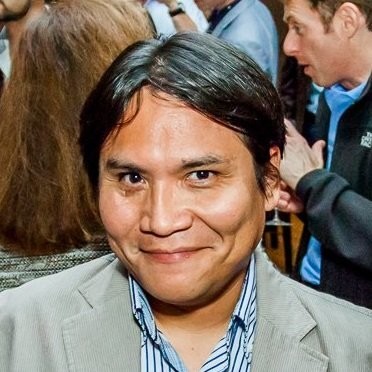
Erick Vargas

Senior Honorary Council Member|Academic & Research Leadership

Senior Software Engineer at TK Elevator

I am a results-driven AI Data Engineer who builds scalable data pipelines and intelligent AI systems that power analytics and decision-making. Currently at Pfizer, I work with SQL, Python, Spark, Snowflake, and AWS to develop production-grade ETL pipelines and data platforms while also building Agentic AI and RAG systems that enable smarter interaction with enterprise data.
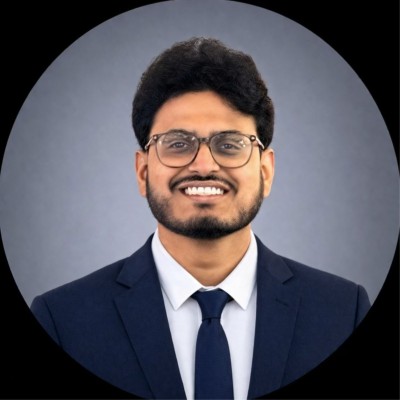
Vinay Chowdary Vemuri

Senior Honorary Council Member|Academic & Research Leadership

Data Engineer at RandomTree

Vinay is a Data & AI Engineer and researcher specializing in advanced data systems, artificial intelligence, and intelligent decision-support. His expertise includes data engineering, machine learning, Agentic AI, retrieval-augmented generation, and enterprise analytics, with experience developing production-grade AI systems in pharmaceutical environments. His research focuses on reliable, responsible, and human-centered AI, with interests in healthcare AI, intelligent data infrastructure, responsible AI, and human-AI collaboration.
As a Senior Honorary Council Member of the Human Agency in AI Council, Vinay contributes to initiatives advancing responsible AI, human agency, and the practical integration of intelligent systems.

Council Structure


How individual professionals participate in the Council’s work.

Council Members

Senior professionals selected for their expertise, leadership, integrity, and contribution to the Council’s mission.

Senior Advisors

Experienced executives, researchers, and specialists providing strategic insight for Council initiatives and organizational engagements.

Research Fellows

Professionals and academics contributing to applied research, white papers, frameworks, executive briefings, and publications.

Affiliated Experts

Independent specialists invited to contribute to specific research, advisory, educational, or consulting projects based on their expertise.

Governance & Professional Standards

Membership and participation are subject to the Council’s governance framework, approval process, and professional standards.

Membership and Approval Standards

Participation through invitation or selective application and Council approval.

Code of Professional Conduct

Standards governing integrity, professionalism, respect, independence, and responsible participation.

Conflict of Interest Policy

Transparent identification and management of financial, institutional, and professional conflicts.

Confidentiality Standards

Protection of organizational information, research materials, client discussions, and sensitive data.

Publication and Research Standards

Evidence requirements, contributor attribution, professional review, references, and editorial integrity.

Consulting Quality Standards

Standards for project scope, expertise, deliverables, confidentiality, quality review, and organizational value.

Founder and Chair Governance Authority

Responsibility for strategic direction, institutional standards, membership approval, and protection of the Council’s mission.

Academic and Institutional Collaboration


Institutional Partnerships with organizations that collaborate with HAAIC on research, education, professional dialogue, and implementation. These are organizational relationships, separate from individual Council membership.

[University / Institution Name]

Academic and Institutional Collaboration

[What the organization is and its institutional role.] [The nature of its collaboration with HAAIC and what it contributes to research, education, professional dialogue, or implementation.]

[University / Institution Name]

Academic and Institutional Collaboration

[What the organization is and its institutional role.] [The nature of its collaboration with HAAIC and what it contributes to research, education, professional dialogue, or implementation.]

Interested in an institutional partnership? Engage the Council

Why a Council Model?


Artificial intelligence transformation cannot be solved through technology alone.

It requires an understanding of human behavior, leadership, governance, business strategy, risk, workforce readiness, operations, communication, ethics, and organizational change.

The Council assembles the right combination of professionals for each challenge, allowing organizations to access broader judgment, deeper expertise, and more balanced recommendations.

Professional Disciplines Represented


Strategy and Leadership

• Business Leadership • AI Strategy • Corporate Governance • Organizational Transformation • Entrepreneurship and SMBs

Technology and Risk

• Artificial Intelligence • Technology and Data • Cybersecurity and Privacy • Risk and Compliance • Law and Public Policy

Human and Organizational Sciences

• Psychology and Neuroscience • Human Resources • Organizational Behavior • Education and Research • Ethics and Philosophy

Business Functions

• Operations and Finance • Marketing and Communications • Change Management • Innovation and Product • Public and Civic Institutions

Credibility Through Contribution

The Council builds credibility through the quality of its contributors and the value of its work.

Published White Papers and Executive Briefings

Research and practical guidance addressing consequential AI governance questions

Multidisciplinary Professional Review

Publications and frameworks strengthened through independent professional critique.

Applied Research and Organizational Frameworks

Research translated into useful methods, assessments, and implementation tools

Conferences, Workshops, and Executive Discussions

Professional programs connecting governance principles with real organizational decisions.

Academic and Institutional Collaboration

Partnerships supporting research, education, professional dialogue, and responsible implementation.

Transparent Authorship, References, and Standards

Clear attribution, evidence, review processes, and publication integrity.

A Selective Council for Responsible AI Leadership

Senior professionals combine research, executive judgment, and applied expertise to help organizations adopt AI without sacrificing human capabilities, accountability, employee expertise, or institutional knowledge.